CTV Campaign · Global Rescue · 2025–2026
Performance-Driven CTV Campaign
Turning a traditionally fear-based category into a brand story about confidence, with creative decisions shaped by performance data.
The category sold fear. We sold confidence.
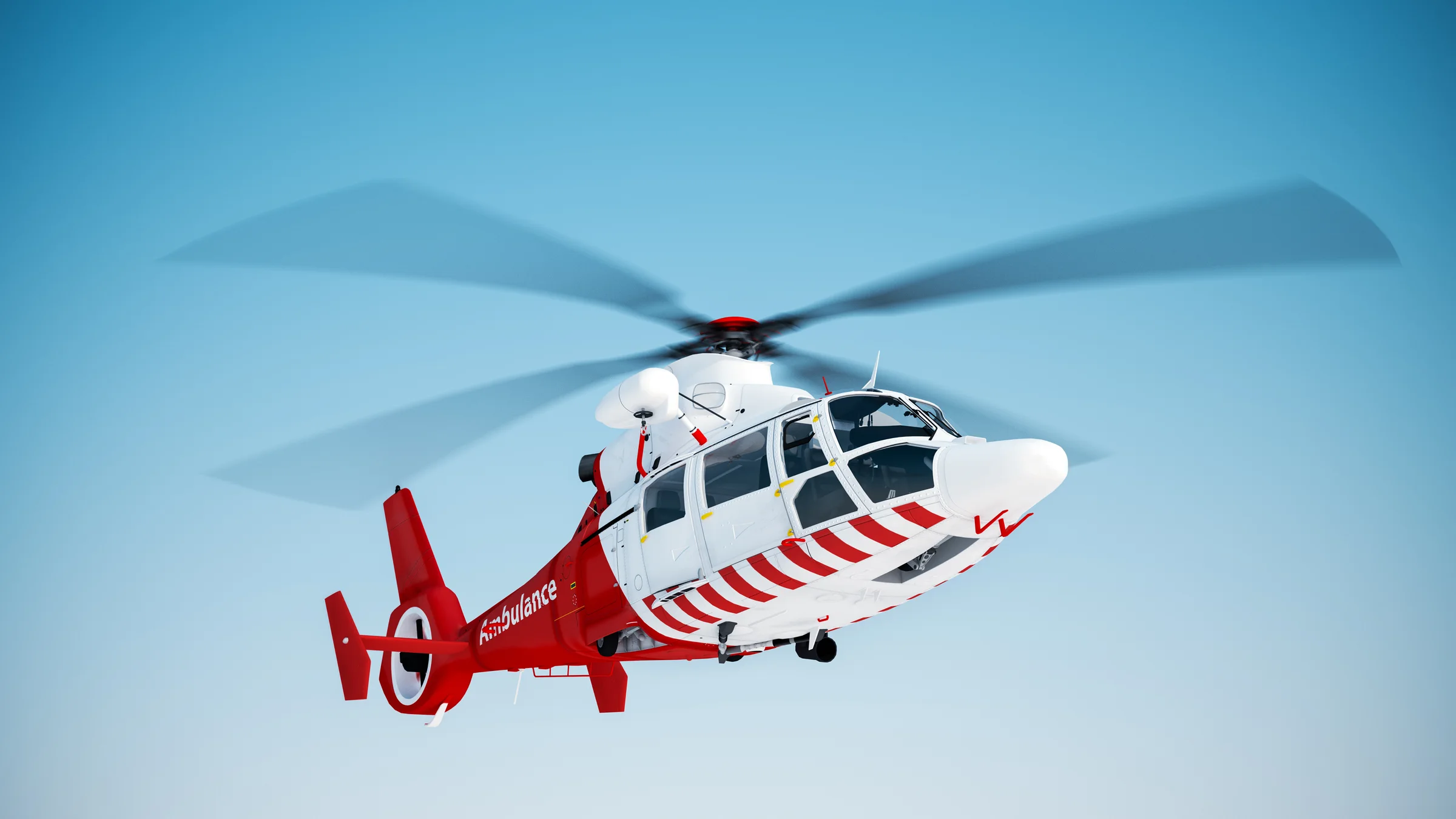
Travel protection had long been marketed through worst-case scenarios: helicopters, disasters, and everything that could go wrong abroad.
But the bigger challenge was understanding. Travelers often confused Global Rescue with travel insurance or assumed it was primarily for mountaineers and expedition teams.
The opportunity was to change the conversation, from fear of what might happen to confidence in knowing you’re prepared.
That became the foundation for an ongoing CTV campaign built around distinct creative ideas, testing, and iteration.
My Role
Creative direction, from idea to air.
I led the creative vision from early concept development through production, post-production, and final delivery.
That meant bringing together our internal creative and marketing team with external production partners, shaping concepts and scripts, directing creative kickoffs, and making the final calls when needed.
I wrote Lost Dino and Bucket List Hike, collaborated closely with our copywriters and videographers across the other spots, and led our studio partners through casting, locations, production, and post.
Impact
Performance data from each quarter informed the next round of creative development.
How We Worked
I led a creative process that gave talented people room to generate, test, and improve ideas, ultimately producing work that performed for the business.
- Strategy
- Concept
- Production
- Measurement
- Iteration
Each spot gave us another opportunity to test a message, a tone, a creative device, or a different way of telling the story. That meant creative decisions weren’t based on taste alone. When we could test an idea, we did.
And when the data challenged our assumptions, we listened.
01 Q2 2025 · Internal Monologue
Beach
Can confidence replace catastrophe?
The first spot deliberately moved away from the category’s usual fear-based advertising.
A mother sits on a Caribbean beach watching her family in the surf while an internal monologue runs through the things she doesn’t have to worry about because she has Global Rescue.
The team had two strong instincts for the execution: one upbeat and energetic, the other quiet and reflective. Rather than decide which one was “right,” we made both. Same script. Same cast. Two tonal approaches. We A/B tested them on MNTN.
Creative / leadership call
Sometimes testing the creative disagreement is more valuable than resolving it.
What the data showed
Eleven months and $302,584 of media later, neither cut won. On matched prospecting delivery they finished at 1.59x and 1.60x. Blended, the quiet cut looks 29% better, but that gap is a budget artifact: it received $79,000 of retargeting spend and the upbeat cut received none.
02 Q3 2025 · Character Contrast
Airport Encounter
Make the product difference impossible to miss.
The category’s biggest misconception was that Global Rescue and travel insurance were essentially the same thing.
Instead of explaining the difference through features, we built it into a conversation between two travelers at an airport baggage carousel.
This was the hardest spot to land. The first cut came back flat, and the production budget was already spent. I pushed the production team to keep working rather than abandon the concept, exploring alternate takes, performance, pacing, and music until the piece found its voice.
It went from a questionable first cut to the strongest-performing spot in the campaign.
Creative / leadership call
The peak number gets attention. The sustained prospecting performance is the number I trust. The people this spot brought in weren't just converting. They were buying more.
03 Q4 2025 · Genre Parody
Bathtub Slip
Take the brand somewhere it hadn't been before.
Global Rescue had another perception problem: the belief that it was only relevant to mountaineers and expedition teams.
The creative answer was humor. Two clawfoot tubs sit at the edge of a safari, staged like a glossy luxury travel advertisement from the mid-2000s. Then the husband stands up, slips, and suddenly we’re in a Global Rescue commercial.
It was the biggest tonal swing of the campaign.
The spot was finished just as geopolitical events in Iran put Global Rescue’s real-world rescue work in the news. Our CEO made the call to hold it rather than release it at that moment. The team supported the decision.
Creative / leadership call
A good creative idea isn't automatically the right idea right now.
04 Q1 2026 · Child's Imagination
Lost Dino / Trip Booked
Let the team's ideas make the work better.
Lost Dino started with a simple observation from my own experience as a parent: the “what if?” questions start long before the trip does.
That became a family preparing for vacation, a child asking increasingly unlikely questions, and a parent answering each one with the same calm refrain: “We call Global Rescue.” The stuffed dinosaur came from real life.
The same shoot also gave us an opportunity to create a second concept. Rather than over-direct the production partner, we gave them room to shape it. Their version came back stronger than the original brief. So we made both.
Creative / leadership call
You don't have to have the best idea. You have to create an environment where the best idea can emerge.
05 Q3 2026 · Split Screen
Bucket List Hike
Make the difference impossible to misunderstand.
Concepting
The latest spot takes the distinction between field rescue and travel insurance and makes it visual.
Two travelers take the same trail and experience the same fall. The only difference is who they called. A split-screen lets both outcomes unfold at the same time: one traveler gets field rescue, a stretcher, and a hospital bed; the other stays where he is.
The creative hinge is a single overlapping line: “That’s why I got Global Rescue—” “—travel insurance.”
We used AI-generated concepting early in the process to pressure-test the visual logic before committing to production. Once the idea held together, human creative judgment took over: refining the story, pacing, visual hierarchy, and final execution.
The spot launched on MNTN in Q3 2026.
Closing Thought
Creative gets stronger when the room gets bigger.
The best part of this campaign wasn’t any individual commercial. It was building a process where copywriters, designers, marketers, production partners, and leadership could all contribute, and where the work could improve through iteration rather than being locked to a single person’s initial idea.
Some ideas needed to be pushed.
Some needed to be tested.
Some needed to wait.
And some got better because I got out of the way.
The result was creative that was more varied, more confident, and ultimately more accountable to the business.
Credits
Creative Direction
Joseph Lambert
Script Writing
Charles McCarthy
Joseph Lambert
Storyboards & Visual Development
Allie Savage
Concept Development & Feedback
Bill McIntyre, Michael Holmes, Wil Klass, and the Global Rescue marketing team
MNTN Coordination & Distribution
Shehryar Shaukat, Wil Klass